











Invicta Motors · Mazda news
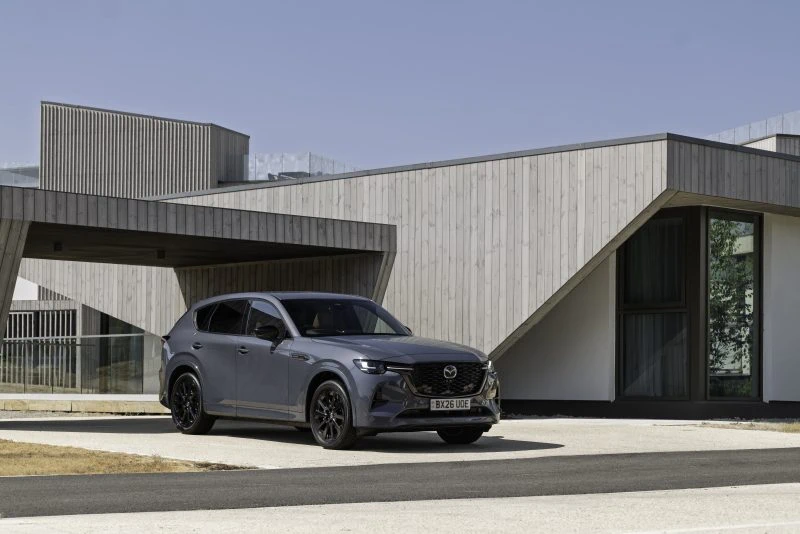
CX-60: diesel or plug-in hybrid?
Both offer automatic convenience and all-wheel drive. Your usual journeys—and how easily you can charge—are the best place to start.
Your quick guide
- Regular long journeys: the 3.3-litre diesel is worth considering if you want straightforward refuelling without a charging routine.
- Shorter trips with charging: the plug-in hybrid can cover suitable journeys using electric power, with petrol available for longer travel.
- Compare your actual routine: look at charging access, journey length and the exact car’s running costs before choosing.
Two ways to enjoy the CX-60
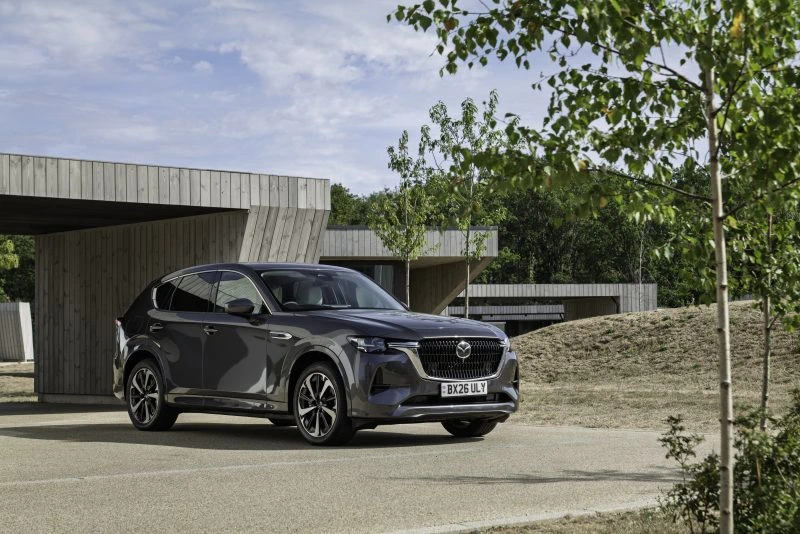
The CX-60 gives you a choice within the same five-seat SUV: a six-cylinder diesel with mild-hybrid assistance, or a petrol plug-in hybrid. Both current UK powertrains use an eight-speed automatic gearbox and all-wheel drive.
e-Skyactiv D diesel
- Engine
- 3.3-litre six-cylinder
- Output
- 254 PS
- Torque
- 550 Nm
- Charging cable
- Not required
Consider it for regular longer journeys and a routine built around normal fuel stops.
e-Skyactiv PHEV
- Petrol engine
- 2.5-litre four-cylinder
- System output
- 327 PS
- System torque
- 500 Nm
- Battery
- 17.8 kWh
Consider it when plugging in regularly would be a convenient part of the week.
Current UK powertrain details: Mazda’s CX-60 technical guide. Earlier used versions can differ.
When the diesel makes sense
If your diary is full of longer cross-country trips, the diesel deserves a place on the shortlist. It avoids the need to fit charging into the journey and offers the flexibility of familiar fuel stops.
Its mild-hybrid system assists the diesel engine and recovers energy as the car slows. You do not plug it in, and it should not be confused with the PHEV’s ability to travel on electric power.
On a test drive, include a safe stretch of faster road, a familiar hill and some lower-speed driving. Judge how the engine and gearbox suit the way you travel, rather than choosing purely on the size of the engine.
When the plug-in hybrid makes sense
The PHEV is particularly interesting if you can charge reliably at home or work and much of your driving consists of shorter journeys. Mazda’s UK technical guide quotes up to 39 miles of electric driving; the exact version’s official figure and real-world conditions both matter.
Treat that figure as a starting point for planning. Leave room for colder weather, faster roads and heating or cooling use. The petrol engine remains available when the electric range is used or the car requires it.
For example, a driver with a 20-mile daily round trip and a convenient overnight charger has a different opportunity to use electric power from someone covering 120 motorway miles a day with no regular place to plug in. These are illustrations of different routines, not measured CX-60 test results.
Compare costs on the same basis
A plug-in hybrid’s headline weighted mpg figure includes electric driving under the test procedure. It is not a promise that you will achieve that petrol economy on a long journey without charging.
For a useful comparison, write down these four numbers:
- Your expected weekly mileage and the length of your regular journeys.
- The price of diesel or petrol where you normally fill up.
- Your home or workplace electricity tariff, or the public tariff you expect to use.
- The purchase or finance quotation for each actual car, plus servicing and insurance.
With a PHEV, count electricity as well as petrol, including charging losses. The lower running-cost option depends on how you use it; the powertrain badge alone cannot answer that.
What the latest CX-60 update adds
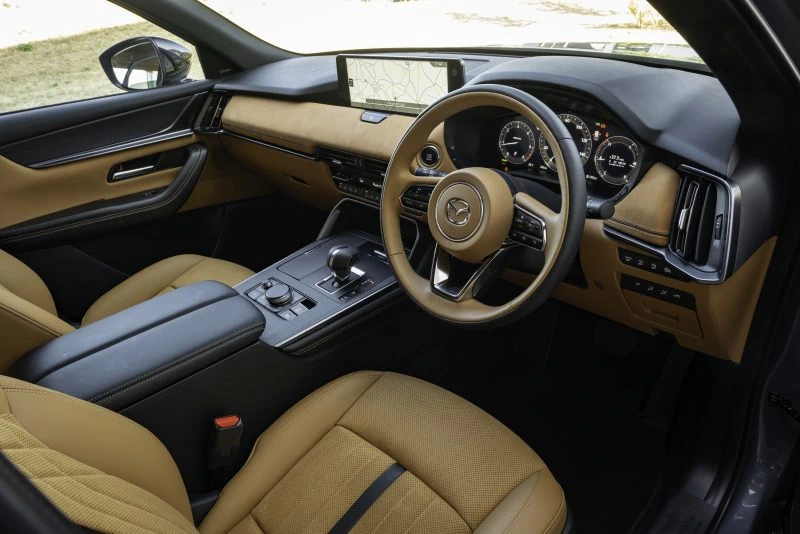
Mazda’s August 2026 UK update brings noise-insulating glass to the front doors across the range, Amazon Alexa in-car voice recognition and revised navigation. Homura Plus also gains a tan interior option.
These are useful details to check when comparing an available new car with an earlier example. Model year and grade matter: a recently registered car is not automatically the latest specification.
Once you have chosen the powertrain, compare the seating, controls and equipment you would enjoy every day. You can explore the CX-60 range at Invicta and use the current offers page for your next quotation.
Update details: Mazda UK’s 2026 CX-60 announcement.
Your questions answered
Does the CX-60 diesel need charging?
No. Its mild-hybrid assistance works without an external charging cable. You refuel with diesel.
Can the CX-60 plug-in hybrid travel without petrol?
It can drive on electric power when charge and operating conditions allow. The engine may start when required, so electric operation is not guaranteed in every situation.
Is a CX-60 PHEV suitable if I cannot charge at home?
Consider whether you have dependable, affordable workplace or public charging. Without a convenient charging routine, you may make less use of its electric capability.
Are both versions automatic?
Yes. The current UK diesel and plug-in hybrid described here both use an eight-speed automatic transmission.
Which version is best for motorway driving?
The diesel is a useful starting point for frequent long journeys without charging. The PHEV can also make long trips; compare your full week, including shorter journeys when electric driving may be useful.
Where can I arrange a CX-60 test drive?
Contact Invicta Mazda Bolton or Northampton to check the powertrains and vehicles available for a test drive.
Talk to Invicta Mazda
Tell our Bolton or Northampton team about your usual journeys and charging access. They can help you compare available CX-60 versions and arrange a suitable test drive.
Invicta Motors’ motoring heritage dates back to 1923. Discover our story.
Keep exploring: CX-60 range · Mazda warranty explained.
Sources: Mazda UK powertrains · 2026 Mazda CX-60 update · Invicta CX-60.
UK information checked on 25 September 2026. Availability, specifications and terms can change; confirm the details for your chosen vehicle or service.